
A.I. with Intention: Recap of June Luncheon


SOURCE Nashville invited its members to a timely panel discussion exploring how women in the music industry can thoughtfully navigate artificial intelligence. During a luncheon on June 26, SOURCE members learned how to leverage AI’s benefits, understand its risks, and keep human creativity at the center.
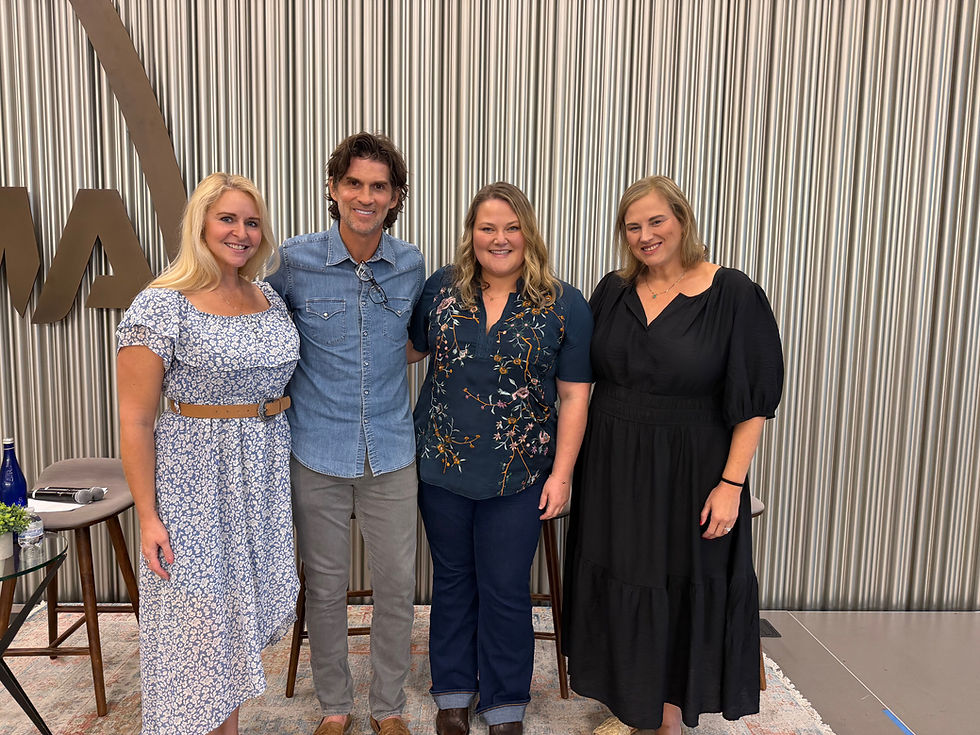
The hour-long discussion, AI, With Intention: What to Use, What to Question, What to Protect, featured Provident Entertainment SVP Business Strategy & Operations Mat Anderson, songwriter Mia Fieldes, and Gotee Records GM Jess Loper. The panel was moderated by Andie Rankins, SOURCE member and Essential Music Publishing LLC VP, Publishing Administration.
Rankins introduced the panelists and explained that each person engages with AI in very different ways. “Some from a place of creativity and storytelling, some from the lens of systems and execution, and others from a more strategic, big picture view of where it’s all going,” she said. “What I appreciate about each of them is that they’re not just using AI because it’s there; they’ve been very thoughtful about how they go about using it. They use it with intention.”
While Fieldes shared a story about how her sister, a branding and marketing executive, used AI to write a song that TobyMac ultimately recorded, Anderson said he uses it to fill skill gaps, such as editing. “I don’t let it write for me; I let it edit,” he noted. “There’s a margin of error, but it’s pretty accurate.”
Loper stressed that authenticity is still needed in the music industry, and that’s one of AI’s shortfalls. She likened AI to CliffsNotes’ study guide.
“You could read CliffsNotes, or you could actually read the book, but if you did a hybrid of them both, you probably aced the test,” she said. “I still have to use my own brain. I don’t want to get that atrophy of not using my own research skills and figuring things out, and that was the moment where I was like, ‘Okay, I’ve done this before. We are an ever-changing industry. If I don’t get on board, we’re going to be left behind, and the company will be, too.’”
All three panelists agreed that while AI can make their jobs easier, there are limitations on what it can do, and guardrails must be put in place.
“For me, the line is, I always want to be the originator of the idea,” Fieldes shared. “I always want to be the originator of creativity, and I want to use AI to facilitate that creativity. … I write songs because I love it. I never want to offload something I love to artificial intelligence.”


Comments